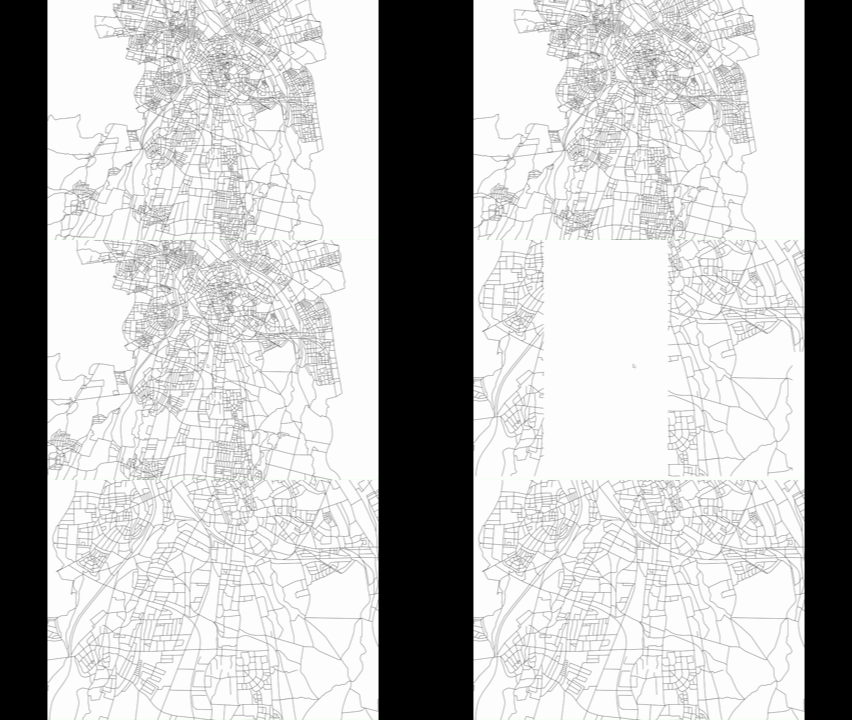
We are seeing individual tiles flash or disappear while zooming with GPU rendering enabled. The affected map contains shapefile layers only. A short GIF and the GPU log are attached.
We noticed this after updating to beta160 - and refactoring our GPU integration to use the recent SDK fixes. Styles are composed into fresh MapStyle instances, and supported style/source changes retain the GPU host and existing readers.
Eligible shapefiles use PMTiles; others use runtime vector tile cutting.
Our code review has not found an unconditional host replacement, source rebinding or SetStyleAsync call during ordinary zooming with unchanged styles and highlights. However, we have not yet established whether
this is an integration regression or an SDK rendering issue.
Expected: existing tile coverage remains visible until replacement tiles are ready.
Actual: individual tile regions visibly flash or disappear during zoom, as shown in the GIF.
Could you inspect the attached GPU log for tile-loading failures or gaps in the transition between existing coverage and newly loaded tiles? Please let us know which additional diagnostics or source details
would help isolate it.
Hidden layers still generate tiles. Only rbn_seg remains visible, but all four sources continue cutting tiles. A hidden address-layer request takes 7.82 seconds, including queue time.
ThinkGeo hits its retained-tile splitting limit 29 times, reporting up to 14 tiles “left whole” at the 96-slot cap. This is a useful tile-transition clue, but does not mean those tiles were discarded.
GPU execution is typically fast—median 0.36 ms—while frame gaps reach roughly one second.
Thanks for the log and the GIF! We’ve made some changes accordingly in the latest beta163.
15.0.0-beta163
A source whose layers are all hidden is no longer fetched. Your map cut four sources per scene with one visible; the hidden address source alone took 4-7 s and ~22 MB per tile. It now cuts one, and a hidden source rejoins the moment a layer of it is shown.
A tile could stay blank until the next scene update when an eviction dropped the queued registration of a tile it meant to keep. Fixed.
Two blank-frame diagnostics, [SurfaceGap] and [EmptyScene], now write to the GPU trace with the frame index.
What your files say
The [LongFrame] gaps are idle time, not stalls (asked=0); GPU time is 0.2-0.5 ms; no load failures.
The GIF shows the whole viewport going blank for 1-2 frames at a time, not single tiles. Which of the two mechanisms does it is what the beta163 trace will tell.
Next
Please run the same zoom on beta163 with the GPU trace on and send it, ideally with the clock time of a blank you saw. The [SurfaceGap] / [EmptyScene] lines will point at the culprit.
The retained-tile split cap message is harmless: those tiles are drawn whole, at the cost of some double-painting until the settle commit.
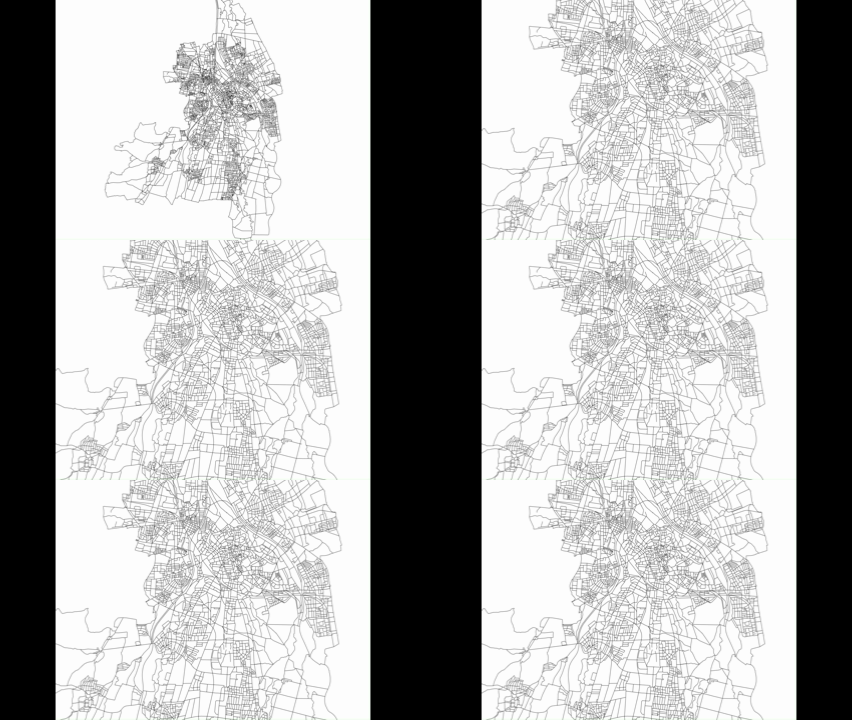
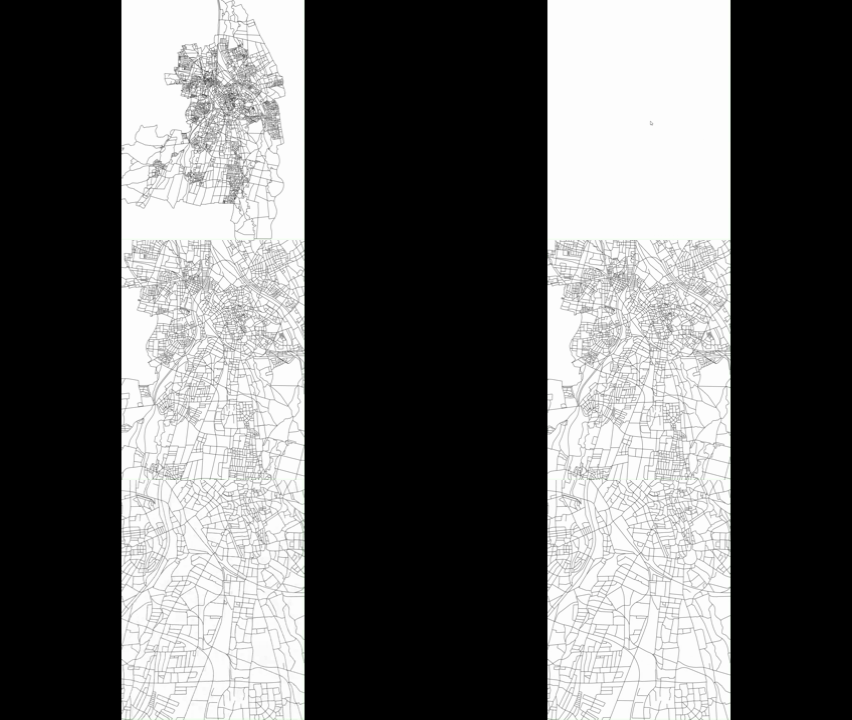
Hi Ben - no, the issue is actually that each individual tile flickers off and on once sequentially. Sorry the gif was probably a bad example. Heres a better one:
Thanks - the second set of clips and the three logs made it clear. We made the following improvements in the latest beta:
15.0.0-beta167
Tile by tile, in sequence: a watchdog judged a tile “stuck” when it had not been drawn for 300 frames and reloaded it - and a tile whose layers are hidden, or outside their zoom range, is never drawn. Every reload blinked those tiles one after another. The watchdog now asks whether the tile is there, not whether it drew.
The whole map, once per zoom (new in beta163): hiding a layer reloaded the scene, so your hide-everything step reloaded once with nothing to fetch and the show step reloaded again. Hiding no longer reloads anything; only a layer coming back does.
The whole map, one frame at the end of each zoom’s upload (frames 161 and 790 in gpu2.txt): the new level’s tiles claimed the screen one frame before they were allowed to draw, and the old tiles had already stepped aside. The old tiles now stay until the new ones draw.
What the logs say
[LongFrame] gaps are still idle time, GPU time is small, no load failures. With beta163+ the hidden address source is no longer cut (4-7 s per tile gone).
The trace now also writes [DisplaySet] when a display set shrinks and [CoverageWatchdog] when a reload is forced, so a blink in a future log has its cause next to it.
Next
Run the same zoom on beta167 with the trace on. If anything still blinks, send gpu.txt again.